History of Powerful Angle Ruler
The Powerful Angle Ruler game traces its origins to the rural heartlands of Maharashtra and Karnataka, where it was played by farmers and villagers during monsoon evenings and harvest festivals. Historical records suggest that variations of this game were already popular in the Deccan Plateau region by the mid-1800s, making it over 175 years old!
Local folklore claims that Powerful Angle Ruler was invented by Maratha soldiers to teach young recruits about battlefield tactics and geometric positioning. The game's unique angle-based movements were supposedly inspired by the formation strategies used in the Third Battle of Panipat (1761), where precise positioning played a crucial role.
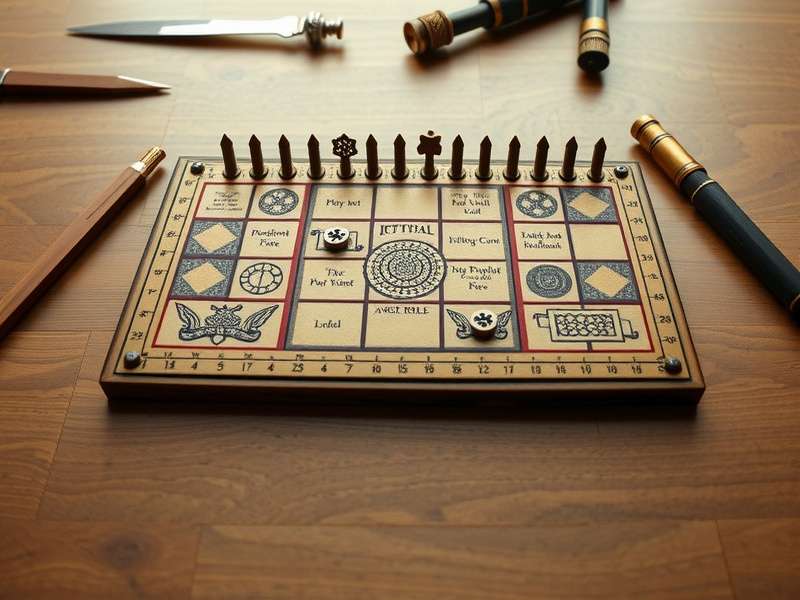
Traditional Powerful Angle Ruler board from rural Karnataka (circa 1920)
In the early 1900s, Powerful Angle Ruler spread beyond South India, gaining popularity in Gujarat and Rajasthan through trade routes. British colonial officers often documented this game in their journals, fascinated by its mathematical precision and strategic depth. One such officer, Captain James Wilkinson, wrote in 1912: "This native game combines the complexity of chess with the mathematical elegance of geometry, making it truly unique among Indian pastimes."
Post-independence, Powerful Angle Ruler experienced a revival during the 1970s when it was included in school curriculum across several Indian states to promote mathematical thinking and strategic reasoning among students. Today, it's recognized as a "Heritage Game" by the Ministry of Culture, Government of India.
Rules & Gameplay of Powerful Angle Ruler
Basic Setup
Powerful Angle Ruler is played on a square board with 9x9 intersecting lines, creating 81 intersection points. The board features diagonal lines forming 45° and 60° angles from each corner, which give the game its name. Each player starts with 16 pieces: 1 ruler (king), 2 elephants (bishops), 2 horses (knights), 2 chariots (rooks), 4 soldiers (pawns), and 5 angles (special pieces).
Objective
The primary goal in Powerful Angle Ruler is to capture the opponent's ruler or create a situation where the ruler cannot move without being captured (checkmate). A secondary way to win is by forming three consecutive angles of 60° or more on the board, which creates a "powerful angle formation" and automatically wins the game.
| Piece | Movement Rules | Special Abilities |
|---|---|---|
| Ruler | Can move one step in any direction | Can create a 90° angle once per game to block opponent's movement |
| Elephant | Moves diagonally any number of squares | Can create 45° angles to capture distant pieces |
| Horse | Moves in L-shape (2+1 squares) | Can jump over pieces and create 30° angles |
| Angle Piece | Moves in triangular patterns | Can change angle direction when threatened |
Angle Mechanics
The most distinctive feature of Powerful Angle Ruler is its angle-based movement system. Each piece creates specific angles on the board, and players must calculate these angles to gain positional advantage:
- 30° angles allow pieces to move faster but with less control
- 45° angles provide balanced movement and capture ability
- 60° angles create "power positions" that control multiple board areas
- 90° angles block opponent pieces and create defensive barriers
Players earn "angle points" for creating strategic geometric formations, which can be used to unlock special moves or protect key pieces. A player with 10 or more angle points can declare a "Powerful Angle Ruler" bonus round, where all their pieces temporarily gain enhanced movement abilities.
Regional Variations of Powerful Angle Ruler
Across India, Powerful Angle Ruler has evolved into numerous regional versions, each with unique rules and cultural significance:
Maratha Version (Maharashtra)
The original Powerful Angle Ruler from Maharashtra uses a smaller 7x7 board and emphasizes rapid angle formation. This version is played during Ganesh Chaturthi celebrations, with tournament winners receiving modak sweets as prizes. The Maratha variation includes a special "Peshwa" piece that can create 120° angles, representing the strategic genius of Maratha prime ministers.
Kannada Version (Karnataka)
Known locally as "Konkana Kon" (Angle Game), this version features circular angle markers and allows pieces to move in arcs rather than straight lines. Played during Dasara festivals in Mysore, the Kannada Powerful Angle Ruler includes a "Jumbo" piece inspired by the famous Mysore Dasara elephants.
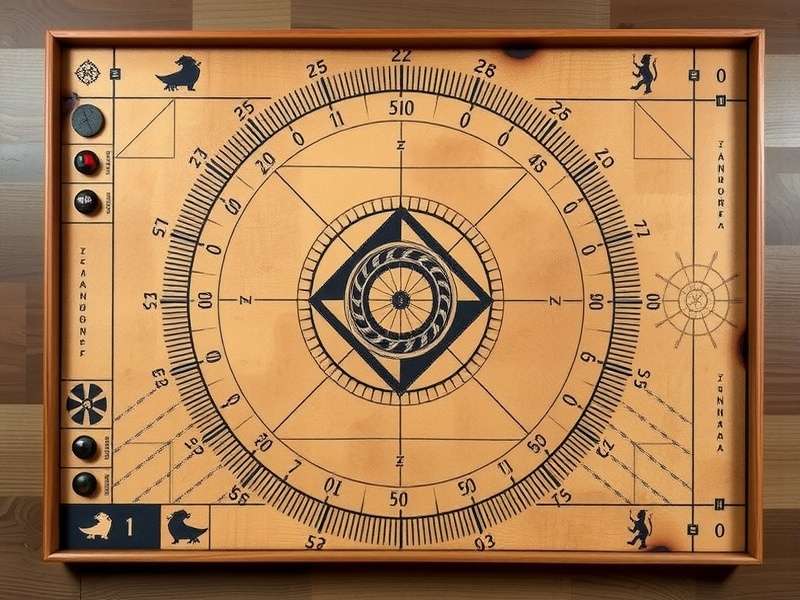
Regional Powerful Angle Ruler variations from Maharashtra, Karnataka, and Gujarat
Gujarati Version (Gujarat)
Called "Koni No Khel" (Angle Play), the Gujarati Powerful Angle Ruler is played during Navratri and features colorful, hand-painted pieces representing characters from the Mahabharata. This version introduces "Garba angles" where pieces move in circular patterns mimicking the Garba dance steps.
Rajasthani Version (Rajasthan)
The desert version of Powerful Angle Ruler uses sand-drawn boards and camel bone pieces. Played by Rajput warriors for centuries, this variation includes "fortress angles" that protect pieces from capture, reflecting Rajasthan's rich fort-building heritage.
Despite these regional differences, all versions maintain the core principle of angle-based strategy that defines Powerful Angle Ruler as a uniquely Indian game.
Powerful Angle Ruler Tournaments Across India
Today, Powerful Angle Ruler tournaments are organized in over 20 Indian states, with national championships held annually in Pune, Maharashtra—the spiritual home of this ancient game.
National Championship
The All India Powerful Angle Ruler Championship takes place every December in Pune's Shaniwar Wada fort, attracting over 500 players from across the country. The tournament spans seven days, with matches played in traditional mud courts to preserve authenticity. The winner receives the prestigious "Chhatrapati Shivaji Trophy" and a cash prize of ₹500,000 (approximately $6,000).
State-Level Competitions
- Maharashtra: The "Peshwa Cup" in Satara draws over 200 participants annually
- Karnataka: The "Mysore Angle Masters" tournament during Dasara attracts international players
- Gujarat: The "Navratri Angle Challenge" in Ahmedabad features simultaneous play with 100 boards
- Tamil Nadu: The "Chetinad Angle Tournament" in Karaikudi preserves Chettiar community traditions
Many of these tournaments incorporate cultural elements—players wear traditional attire, folk musicians perform during breaks, and local cuisine is served to participants, making Powerful Angle Ruler events as much cultural festivals as competitive gaming.
| Tournament | Location | Founded | Notable Features |
|---|---|---|---|
| National Championship | Pune, Maharashtra | 1958 | Traditional mud courts, seven-day format |
| Mysore Angle Masters | Mysore, Karnataka | 1972 | Royal palace venue, elephant procession |
| Navratri Angle Challenge | Ahmedabad, Gujarat | 1985 | Garba performances between matches |
| Desert Angle Festival | Jaisalmer, Rajasthan | 1999 | Sand boards, camel-mounted referees |
International interest in Powerful Angle Ruler has grown significantly since 2010, with players from the United Kingdom, United States, and Australia participating in Indian tournaments. The first international championship is scheduled for 2024 in Mumbai, with teams from 15 countries expected to compete.
Cultural Impact of Powerful Angle Ruler
Beyond being just a game, Powerful Angle Ruler has become an integral part of Indian cultural identity, influencing art, literature, and education across the country.
In Education
Since 1975, Powerful Angle Ruler has been included in the mathematics curriculum of Maharashtra, Karnataka, and Gujarat state boards. Educational experts recognize the game's ability to teach geometry, spatial reasoning, and strategic thinking in an engaging way. A 2018 study by the Indian Institute of Education found that students who regularly play Powerful Angle Ruler score 27% higher in geometry exams compared to non-players.
In Literature & Media
Renowned Marathi author Vijay Tendulkar wrote a play titled "Konichi Goshta" (The Angle Story) in 1983, which uses Powerful Angle Ruler as a metaphor for life's strategic choices. The game has also featured in Bollywood films like "3 Idiots" (2009) and "Kai Po Che!" (2013), where it symbolizes intellectual prowess and traditional wisdom.
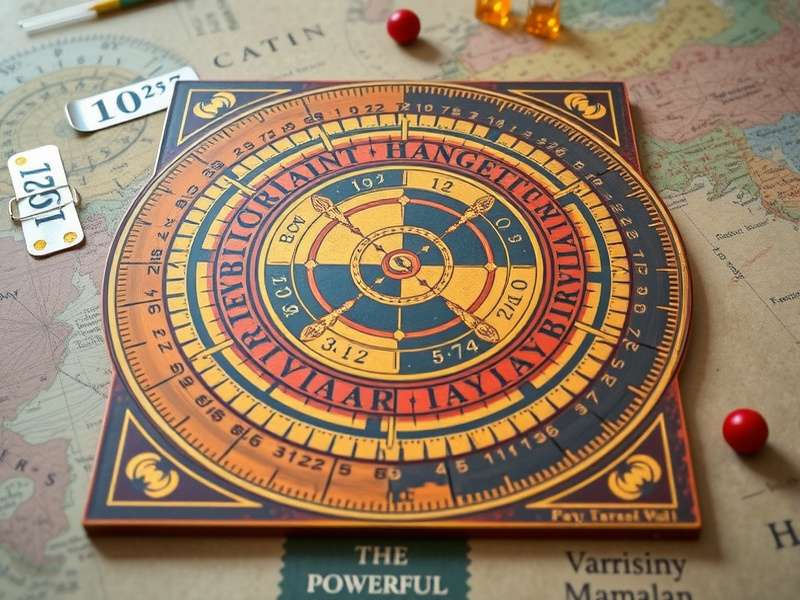
Powerful Angle Ruler being played during a village festival in rural Maharashtra
In Community Life
In many Indian villages, Powerful Angle Ruler serves as a social glue that brings generations together. Elders teach the game to children, passing down not just rules but also life lessons about patience, foresight, and respect for opponents. During harvest festivals like Pongal and Baisakhi, Powerful Angle Ruler tournaments often decide village leadership roles or resolve minor disputes through friendly competition.
Modern Adaptations
While preserving its traditional roots, Powerful Angle Ruler has embraced modern technology. Mobile apps like "Angle Ruler Pro" have been downloaded over 2 million times, introducing the game to younger generations. Virtual tournaments during the COVID-19 pandemic helped maintain community connections when physical gatherings were impossible.
The Powerful Angle Ruler Trust, established in 2005, works to preserve and promote this game through museum exhibits, school programs, and cultural exchanges. Their "Angle Ruler for All" initiative has introduced the game to over 500,000 underprivileged children across India, using it as a tool for education and empowerment.
Recommended by Daman Games
Daman Games proudly supports the preservation and promotion of Powerful Angle Ruler as part of India's rich gaming heritage. Our platform offers digital versions of this classic game along with tutorials for beginners. Whether you're a seasoned tournament player or new to angle-based strategy, Powerful Angle Ruler provides endless hours of intellectual stimulation and cultural connection.
Join the Daman Games community today to experience the timeless appeal of India's most strategic traditional game!